Monday, November 22, 2010

Return from East Africa

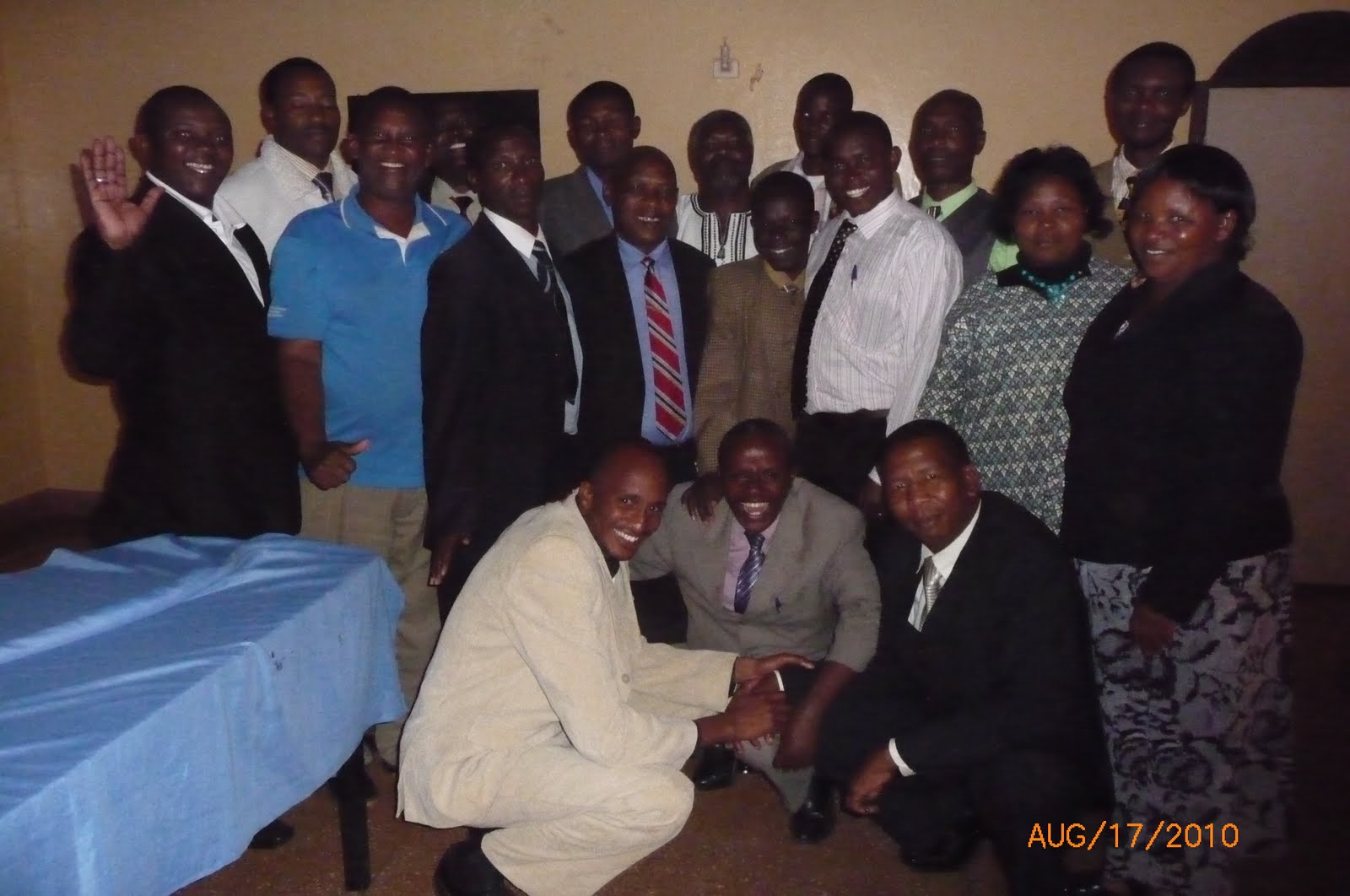
Rwanda 1 Timothy TOT Group 1 Timothy group at lunch

Overlooking Kigali, RW

The remainder of my trip since my last update went well. We had a very good 1 Timothy TOT in Kigali, Rwanda with 15 pastors, and a Biblical Stewardship TOT in Mbale, Uganda with 12 pastors. The TOT in Mbale was particularly fruitful in that it took place at the Pentecostal Theological College. One of the participants was a professor at the college. I talked with him and one of the students, and both expressed interest in translating EPI's material into the Ateso language, and perhaps other languages.

I want to make most of my conferences closer to the TOT format: i.e., participants selected by the African leaders with an eye toward those who are sharp and can be good teachers; smaller numbers; more Q&A and discussion. I think the impact will be greater, as well as the costs held down.

I Guess I am Officially Old--This is the first trip I have made to Africa in which several people have called me "mzee" (i.e., "old man"): a boda-boda (motorbike) driver, someone on the street while I was walking, and a few others. One woman guessed that my age was 60 (I am 58). That is the first time someone over here has erred on the high side of my age. As I was leaving Mbale I was talking with the girl who had been primarily in charge of the food. I said something like Ï hope to see you again if I am back here next yeear." She responded by saying, "Yes, I look forward to seeing that grey hair again." I replied, in as measured a way as I could, while trying to maintain a smile on my face, "Thank you . . . that's very nice of you to say . . . I'm sure."

An Opportunity for You--At the meeting of the EPI East Africa national coordinators, one of the things we talked about was concentrating on creating and equipping core teams of committed, passionate, capable, and well-equipped national teachers in each of the countries. One aspect of equipping them is technologically. Right now, very few of the pastors, including the good teachers I need to rely on, have their own laptops. I would like to help them to get laptops, which I can load with excellent biblical resources. This is where you can help. If you have a used (or new) laptop, would you please donate it to EPI? The donation is, of course, tax-deductible. You could deliver/ship it to me at: 714 S. Summit St., Appleton, WI 54914. The effect in the lives and ministries of these men and women would be tremendous, and it would greatly facilitate our work in East Africa. Please consider this, especially as it is now approaching year-end.

Biblical Eschatology--I am currently working on a set of teaching notes on Biblical Eschatology. This is quite a challenging project, especially since there are 5 main views on the subject. I took 4 books on the subject with me to Africa, as well as the 50 pages of manuscript that I had completed before I left (which is about 1/2 of what I want to write). While in Africa I made copious editorial revisions. I will be spending my time while I am home working on this project. Undoubtedly I will be going down to Deerfield, IL to use Trinity Evangelical School's excellent theological library more than once before the project is completed (which I project for sometime in the Spring). This is an area that sparks great interest in Africa, but is one on which there is much heat but little light. Please pray that I will be able to bring some needed light and clarity to the subject.
And Finally--I hope and pray that you have a wonderful Thanksgiving and Christmas season. I will be home until early January, when I will leave for Florida for EPI's annual meeting and, probably, from there back to Rwanda and Burundi. With the laptop project, translation of multiple sets of teaching notes into several East African languages, and the prospect of many new all-African conferences and TOTs, the need for financial support, of course, is growing rather than diminishing. I thank everyone who has supported this important ministry over the last few years (you know who you are, I know who you are, and God knows who you are). I would simply ask you to prayerfully consider this, and, as Paul says in 1 Tim 6:18-19, be generous and share because, by doing so, you are "storing up a good foundation, and taking hold of that which is truly life." Thanks, and I hope to see many of you before I leave again for East Africa. Take care and God bless you, Jonathan

PS--I have to close now because it's time for my warm milk, and then I have to take my teeth out.

Report from East Africa #2

Rwanda Stewardship TOT group View from Gitarama, RW
Theophile Rugubira teaching at Gitarama conference

Here is the report I sent while I was in Rwanda in the recent Ocy.-Nov. trip:

My trip to East Africa has continued to be busy and productive since the meetings with the national coordinators and the Ugandan leadership team about which I previously emailed you. Following the meetings in Uganda, I took the bus to Kigali, Rwanda (about a 10 hour ride). We began the next day with an excellent Biblical Stewardship TOT for about 15 participants. The participants were from both Rwanda and Burundi. Lots of spirited discussion and understanding.

Following that, we had a pastors conference for about 60 pastors in Gitarama, RW. Gitarama is a scenic town in the Southern Province. I had never been there before. 1 Tim 1:5, as you may recall, talks about the goal of our instruction being love. That spoke powerfully to the participants. In their small group sessions they clearly identified major deficiencies in their churches, ultimately stemming from a lack of love and failure to as a family (see, 1 Tim 3:15). They resolved to make changes.

At the conference, a pastor from Gitarama (who also had been one of the TOT participants) asked me to preach on the goal of love at his church the next day. I expounded on this, and God did a most marvelous thing. One of the women church leaders went out of the church during the sermon and encountered a poor, older woman whose roof was leaking quite badly (it had been raining a lot for the previous several days). The woman wanted to know where she might get a tent. When the leader came back into the church, I was just saying something about practical ways of showing love, including saying something like, "If your mother's house has a roof that leaks, wouldn't you fix it?" She took that as "prophetic." After the sermon, she came forward, spoke at some length (in Kinyarwanda, so I couldn't understand), about the poor woman she had met. She found the woman and brought her forward. Several people, some of them in tears, came forward. One man pledged 2 iron sheets for her roof. One woman pledged 2 bedsheets. Two women pledged some clothing. Two people pledged 30,000frw (about $55.00) apiece. More than one person mentioned that God had brought this woman to the church as an opportunity to demonstrate love. The pastor also told me that he knew men in the church who could do roofing.

Further, one of the church members identified two other needy women. The woman leader who had begun the process said that she would be identifying other needy people in the church. This was not merely an emotional response, but appears to be the beginning of a process whereby this church will be transformed by love. The pastor told me that he would make sure that this was just the beginning, not the end. The transformative power of Christ, when people really grasp the gospel and its implications, is truly amazing. It was one of the most heartening things I have seen and experienced since coming to Africa. Praise be to God. Please hold up Ebenezer Church of Gitarama, Rwanda, that it would follow through, and be a shining example of Christ, the gospel, and the power of love in action.

Report from East Africa #1

JMM and East Africa national coordinators Uganda leadership group

On Oct. 10 I left the US for Uganda and Rwanda. I returned hom on Nov. 5. Here is the first report I sent to those on my email list, while I was in Uganda:

The meeting of the national coordinators in Kampala went well. We spent 2 very full days talking about our vision for EPI, talking about a 5 year plan, and how to actualize it. Our goal ultimately is to see significant change in the churches and the church leaders. The specifics of such change can be measured by the major aspects of the things we teach: e.g., the pastors and their spouses have marriages that are biblical and reflect the relationship between Christ and the church; church leaders are selected by applying the principles of 1 Timothy 3; the churches have formal written budgets; interdenominational pastors fellowships are created and there is greater cooperation between the churches; the pastors begin teaching and preaching expositorily; the churches begin formally discipling new believers.

In order to achieve that, in the next 5 years: we need to get all of our course materials translated into the major East African languages; in each country we will develop a core group of committed, passionate, good teachers ("the cream") who will be our national leaders; we will provide good theological materials to those leaders; we will endeavor to have those leaders all meet together up to 2 times; and I will endeavor to recruit 2 Americans who can do what I do in East Africa. So, if you're interested in teaching in East Africa, please get in touch with me! Our 5 year goal is also to reduce the American portion of the funding of our conferences and TOTs from its current level of almost 100%, down to 50%. This will be a challenge, since the funding requirements will actually increase because, as we develop good teachers in each of the countries, they will be doing conferences and TOTs on their own. Thus, the total number of conferences and TOTs will be increasing substantially. The East African economy will not double or quadruple in the next 5 years, and I am responsible for funding these conferences and TOTs. Over time, by their using the resources they do have, concentrating on smaller numbers of participants, getting foodstuffs donated, etc., the Africans will be able to increase their share of the funding. This will require great prayer and work. But, in the long run, it is hugely necessary if the Africans are truly to take "ownership" of EPI's work in East Africa. That is my goal and their goal. All of the national leaders will keep each other informed by email as they take different steps to achieve these goals.

Following the meeting with the national coordinators, I met with Martin Odi and an interdenominational group of pastors he selected as the core of the Uganda EPI leadership team. They enthusiastically endorsed the importance of what we are trying to achieve. They will all be meeting themselves later this year to strategize and tackle some of the difficult logistical and funding issues. It was a very productive meeting. I want to concentrate on training them (and the similar groups from the other East African countries) well, as they will be the leaders in equipping the African church leaders and transforming the African churches.

We all agree that East Africa--given its history, location, relative stability, democracy, and prosperity--is the key region for all of sub-Saharan Africa. Islam is extremely aggressive, well-funded, and is a substantial threat to Christianity in Africa. As East Africa goes, so goes the rest of the continent. Consequently, what we are doing now, in developing well-trained indigenous pastoral teaching teams for equipping and strengthening the church in East Africa will have important and long-term consequences.

Wednesday, September 15, 2010

Return from Kenya

Gabriel--one of the Expository Preaching student preachers
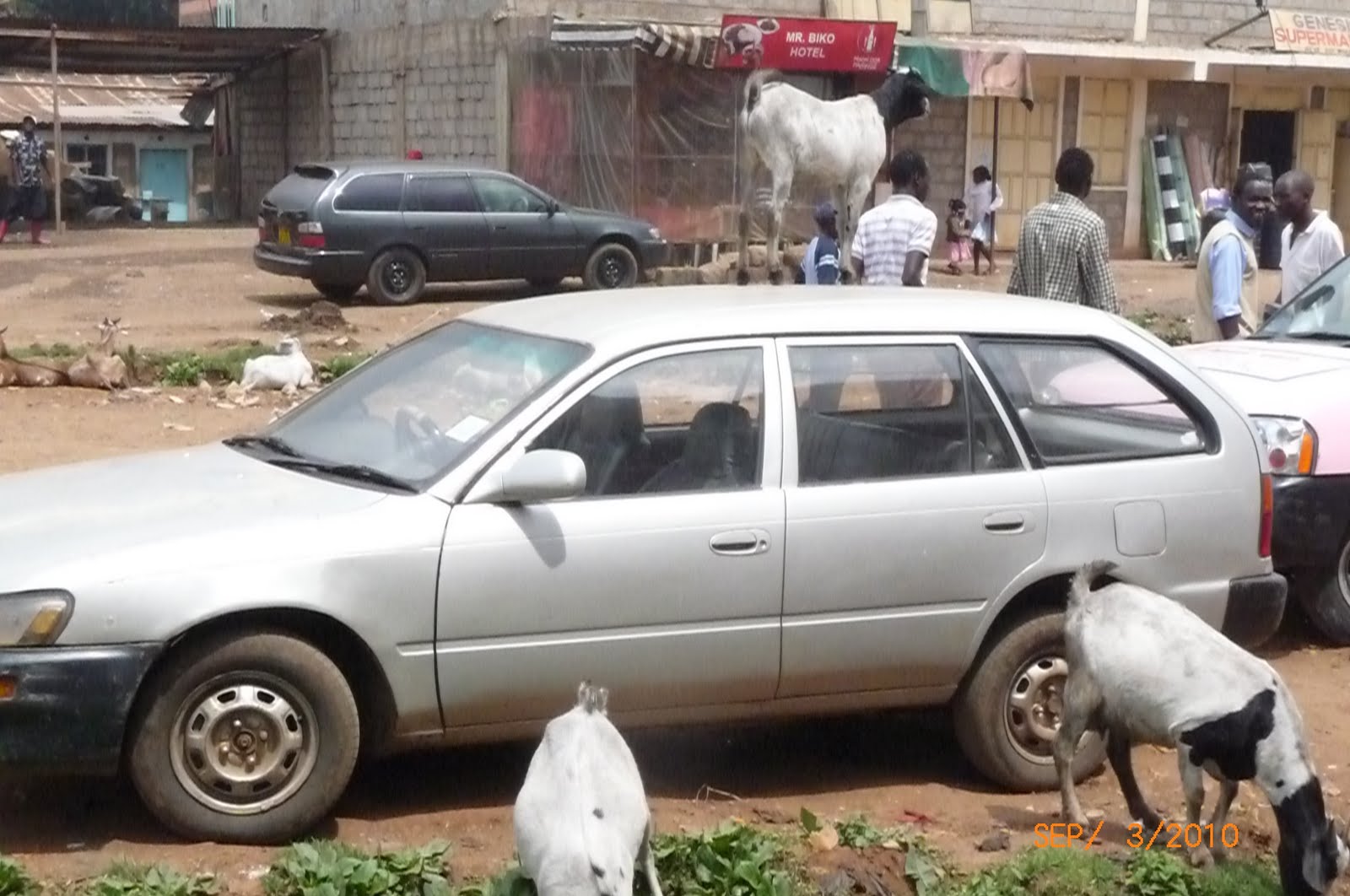
A typical Nairobi street scene

Dr. Frank Cummings leading a Biblical Counseling workshop
On Sept. 9 I returned from almost 4 weeks in Kenya. The trip featured a lot of variety: Expository Preaching TOTs; Biblical Counseling TOTs; Biblical Stewardship conference; and 1 Timothy TOT. Further, except for the last 3 days, the weather was quite cold and wet--colder, in fact, than it was in Wisconsin! That was a surprise.

The Expository Preaching and Biblical Counseling TOTs were the most eye-opening. This summer I was introduced to Dr. Lori Carrell, a Professor of Communications at the University of Wisconsin-Oshkosh. Dr. Carrell also works for the Center for Excellence in Congregational Leadership at the Green Lake conference center. Her particular interest is sermons, concerning which she has researched and written extensively. Her survey data indicates that average sermon preparation time generally is in the 12-13 hour range. In Kenya, however, the pastors indicated that they spend only about 1-3 hours on sermon preparation. I also discovered that most of the pastors had never really done much in-depth analysis of biblical passages. In the Expository Preaching TOTs we spent most of our time analyzing both OT and NT passages (generally ranging from 6-10 verses), so as to be able to preach them. At the conclusion of the 2nd TOT, one of the pastors remarked that, when the TOT began he couldn't understand how anyone could spend 15 hours or so preparing a sermon. However, he said that now he understands, and he now sees the importance of good analysis of a passage and preparation. I also learned that, to be most effective, I should eliminate the general Expository Preaching conferences, and turn the TOTs into 5-days instead of 3. I would also like to return to the same participants next year to build on what we learned this year.

The Biblical Counseling TOTs were similarly eye-opening. My friend, psychologist and counselor Dr. Frank Cummings, made his 2nd trip to Africa. He expertly led the 2 Counseling TOTs, and was well-received and liked by the participants. In fact, he will be traveling to Uganda next month to lead another Biblical Couneling TOT in Lira, Uganda with our Uganda national director, Martin Odi.

We learned that, although many of the pastors had been doing "counseling" for many years, most of the counseling really amounted simply to advice-giving. As with the Expository Preaching TOTs, the Biblical Counseling TOTs were very "hand-on" affairs. Most of the participants' time was spent doing simulated counseling, either as counselor, client, or critiquing observer. The workshop manual that Dr. Cummings and I prepared was very well received. One participant indicated that he learned far more from the experience than he had learned from an expensive counseling course he had taken some years earlier. Again, as with the Expository Preaching, Dr. Cummings and I both agreed that turning the counseling TOT into 4 or 5 days, and returning to work with the same participants and build on what was done this time, would be most effective. We also saw certain revisions that would be helpful in the order and contents of the workshop manual, which Dr. Cummings is now making.

All in all, this was a productive trip, in which we as well as the participants learned a lot. By God's grace, that will lead to more effective and fruitful work in the future. Much remains to be done in all of these areas, but a solid foundation is being laid. Thank you for your prayers and support. They make this all possible. God bless you.

Report from the field--Kenya

1st Expository Preaching TOT Participants
Bishop Kamau and his wife
The following is the report I filed while in Kenya last month:

Many of you know that 1 Timothy and Biblical Stewardship are two of our "foundational" courses which we typically lead off with when we go to new venues. In April we did 1 Timothy in Embu and Nyahururu, Kenya. In this trip I led off with a 1 Timothy TOT for 18 participants who had attended those conferences. It was, I think, probably the best 1 Timothy TOT I have been involved in. The discussions throughout were lively and dealt with important issues and problems facing the Kenyan churches. At such TOTs the participants all give 2 oral presentations, which the rest of the group then critiques. These are a rare opportunity for pastors to have their substance and style assessed by their peers, and proved to be a very valuable exercise. One participant had the right attitude when he wanted to quickly move on from what he did right to hear "the other side of the coin," because he said that's what he knew he needed to hear in order to improve.
We then moved to the Kirinyaga District of Central Kenya for a 1 Timothy conference. It was very powerful. Three bishops were present, which was a very good sign. The Kenyan EPI leadership team has caught the vision. Now, wherever I go in Kenya I can count on well-trained Kenyan pastors from the EPI-Kenya leadership team to come and teach with me. Four of them--George Kariuki, Ernest Mwilitsa, Bob Mwangi, and Thomas Mwai--taught at the Kirinyaga conference and were excellent. One issue we still face, however, is getting the conferences to be more interdenominational. My East African national leaders and I will address that issue (among other things) when we meet in Kampala, Uganda in October.
Bishop Simon Kamau, general overseer of the Christian Foundation Fellowship (CFF) church took charge of me for the weekend. We attended a traditional post-wedding ceremony (his daughter had been married a few months ago), where the bride's side of the family visits the groom's family for a day of formal inter-familial bonding and feasting. I drank some of the traditional Kikuyu porridge ("mokeo") which was not too bad. I was requested to make some remarks, and was able to campaign that the bride (who is now expecting) name their first-born son "Jonathan." (My arguments had nothing to do with the fact that I am named "Jonathan"!) I preached at Bishop Kamau's church and at an open air meeting. Although I am neither called, nor particularly comfortable or competent at such evangelism, Bishop Kamau was gracious in his assessment of my remarks (I suppose such graciousness is one reason why he is such a good and well-respected bishop).
We then did the first of the 4 remaining TOTs we have scheduled for this trip: 2 on Expository Preaching and 2 on Biblical Counseling. I am particularly excited about the Expository Preaching TOTs because: (A) there is a great need for good preaching in East Africa (most preaching here is topical and has little to do with expounding what the Bible says); (B) it is an area I am particularly interested in, since persuasive communication was one of the areas I extensively studied and applied when I was a lawyer; and (C) the TOT process is where I see the greatest and most lasting impact among the African pastors taking place. As we worked through several passages to try to identify good propositions and organizational sentences, at first no one seemed to "get it." The next day, however, something seemed to click, and the 19 participants started coming up with very good propositions and organizational sentences (which are important for understanding the thrust of a passage and organizing the sermon well so as to preach it persuasively). We then added the important aspects of specific application and issue-or-problem-based introductions. All of these things are, essentially, new concepts here--but will make a substantial difference in their preaching.
The Expository Preaching TOT ended on a relatively high-note. The last day I preached and was critiqued by the participants. One of the participants made a point about my introduction which caused me to see that it had really not been formulated properly to correspond with the main point of the sermon. That has forced me to re-analyze the introduction and revise it. That participant probably had never analyzed such things before. The fact that he was able to improve me makes me extremely happy! The 2 students who preached did creditable jobs. There is room for improvement--but they both showed good promise. If they apply what they learned, I foresee good things for the churches. I am now in Embu, Eastern Province, doing a conference on Biblical Stewardship with George Kariuki, Bob Mwangi, and Robert Mwango. Bob told me that he had talked with one woman who was so discouraged that she wanted to leave ministry. After hearing the first few sessions, she said that she felt restored and would carry on with renewed purpose. We thank the Lord for that! We also have seen something that is, unfortunately, all too common here: only 1 of the approximately 70 pastors had a personal, household budget, and only about 5 had formal church budgets. Our materials address that. We include both information and sample budget forms. As Pastor Bob taught the people, they all committed to develop personal and church budgets. That, of course, can make a huge difference in their lives and ministries. Thank you for your continued prayers and financial support. "Slowly-by-slowly" (as we say here in Africa) it is making a difference. God bless you.

Saturday, July 10, 2010

Return from East Africa

Peter Kololi teaching in Singida, TZ Bus accident on the way to Tanga, TZ

EPI team on the east coast of Kenya

Tanzania and Kenya
One week ago I returned from Tanzania and Kenya. This ministry is all about equipping the African pastors so that they can become better teachers. To that end, I always try to have a number of Africans teach with me whenever possible. In Dodoma and Singida, TZ, Wilbert Seme, Peter Kololi, and Peter Minja all taught with me. At our final conference in Kilifi, KE, 4 Africans taught with me: Ernest Mwilitsa (my host); Michael Taari from Nairobi; George Kariuki from Murang'a; and Obed Magoko from Karatina. They did excellent work. A number of people commented to me especially on Michael Taari's applications and examples drawn from real life. That is why I always tell my African friends: "You can teach this material better than I can, because you know the language, you know the culture, and you know the people because you are one of them."
Democratic Republic of Congo (DRC)
Equipping the African church leaders enables the work of EPI to spread to new places indigenously, without my presence. A perfect example of that is what is happening in DRC. Theophile Rugubira of Rwanda and Martin Odi of Uganda led an all-African EPI team to Bukavu in eastern DRC, and just completed EPI's second all-African conference there. Here is part of Martin's report to me on the work in DRC: "The work in DRC is excellent. In my opinion I am praying that the Good Lord will provide more funding to us to teach in Congo than any other place in the great lakes region of Africa, apart from the mentoring classes we want to do in all places. I think the DRC is more hungry and thirsty for these teachings than any place I have ever been in my life! and I mean it. Brother Theo will give a better report than me. But it is awesome! Wow, the army chaplains where drinking everything we said, and have invited us to talk to them in all places. There is a wide open door of ministry in this area than any other."
The value of translating EPI's written materials
An important part of the equipping process is providing the African pastors with excellent biblical materials, and then translating them into their own languages. Thus, while I am home I spend most of my time researching and writing. The value of this was brought home to me in an email I recently received from a Kenyan pastor, Samuel Mwangi. He said this: "I have gone through the EPI website and read some of the materials you have posted in it. I am greatly impressed by the level of research potrayed by those Pastoral Training Materials. They are simple to understand and relevant to our context. The depth and the organisation of the materials is commendable. It is easy to read and its stimulating. Any serious minister will find the truths you have written relevant. You have done an in-depth look at the themes you selected. It is a carefully structured research work. Your work covers a wide range of spiritual issues touching the pastoral ministry. Your resources are the kind of materials I have been longing to come across for my spiritual growth and also for those the Lord has entrusted to my care. It will help us equip a generation of church leaders."
Fun on the road
African travel often presents some challenges. This time, on the lengthy bus ride from Singida to Tanga, TZ, there was a large, disabled lorry parked on the road. As our bus approached it, another vehicle was coming in the other direction. Consequenly, the bus driver slammed on the brakes and jerked the wheel to the left (vehicles drive on the left-hand side of the road in TZ) to avoid smashing into the back of the lorry. The result was that the bus went off the road and into the ditch. The bus ended up at an angle, but fortunately did not fall on it's side. Thanks be to God that no one appears to have been hurt (with the possible exception of one woman who had leg problems, but I don't know if that preceded the accident or not). The accident happened at night. We were still about 30 miles from Tanga. Everyone had to find alternate modes of transportation. Passing motorists picked up some people. I was able to call my friend Joram Ibrahim who, fortunately, owns a car and was able to come and pick me up. I often think that it is the prayers of you, my friends and supporters, that make a difference in situations like this. Thank you.

Report "from the field" (Tanzania)

George Kariuki receiving gift from Arusha, TZ TOT participants Tanga, TZ TOT participants
Dar es Salaam conference in outdoor church


The following report was sent while I was in Tanzania about 3 weeks ago:

The flights from Appleton to Nairobi seemed particularly long this time, inasmuch as I had to leave the day after my daughter's wedding (the wedding itself was a beautiful outdoor wedding at Calumet County Park). George Kariuki met me at the airport. I was the recipient of typical African hospitality, as we were feasted at the home of George's brother-in-law Daniel and his wife Katherine, even though we didn't arrive there until about 10:30PM. Unfortunately, we had to leave early the next morning for the 8 hour bus ride (over horrible roads) to Arusha, Tanzania. In Arusha we conducted our first of two Biblical Stewardship TOTs. Although I generally insist that TOT participants be fluent in English (because TOTs are designed for smaller groups, and a premium is placed on discussion and Q&A), some of these participants were not too fluent in English. Consequently, we conducted the TOT in Kiswahili (I didn't, but we had a translator for me). As a result, I decided that George Kariuki should lead most of the sessions (in Kiswahili), which he did. George is an excellent teacher. All of the participants commented on how valuable this TOT was. Stewardship is one of our core courses, and essentially amounts to applying Christianity and biblical principles to most major areas of life (environment; time; mind; body; money and possessions; and the church). Applying this has the potential of profoundly changing lives. These TOT participants are now in the vanguard of changing people in the churches to a better way of living, which will affect not only the churches but Tanzanian culture.

We then travelled to the east coast of Tanzania, where we did another Stewardship TOT in Tanga, for pastors from both the Tanga area and from Zanzibar. Several of the pastors seemed quite moved by what they had discussed--especially the role that the church should be playing in the lives of the people. Three of the pastors said that, based on what they had learned, although their churches did not currently have formal budgets, they would now be adopting them (the Stewardship materials include information for both household and church budgets, including sample budget forms).

We are now in Dar es Salaam (the national capital) where we have just completed a pastors conference on 1 Timothy. Wilbert Seme and Joram Ibrahim, both Tanzanians, taught with me, and did excellent work. Although we have been in Dar previously, this was a new venue. This work is particularly important here in eastern Tanzania, since Muslims constitute the vast majority of the population here (about 85% in Tanga; 96% in Zanzibar). Consequently, the churches need to be equipped and strengthened so that they can work together and help to meet the important needs in this difficult part of the country.

Pastor Wilbert Seme has been coordinating our work throughout Tanzania. He has been doing a good job. However, he does not have high fluency in English. Having to work through a translator inhibits our ability to communicate well. I am happy to say that Joram Ibrahim of Tanga has agreed to be my Tanzania national contact person and will work with both Wilbert and me (Joram will act sort of as a CEO and Wilbert as a COO). They both will join me and the other national coordinators for a strategizing meeting in Kampala in October. This has been an answer to prayer. I think that, as a result of this trip, we will be able to put into place some good regional leaders throughout the northern half of Tanzania. Since Tanzania is the geographically largest country of East Africa, and has the highest Muslim population of East Africa, establishing a solid organizational foundation for EPI here is of great importance.

Tomorrow we take the lengthy bus trip to Dodoma, a regional capital and site of a large university. From there I plan to go to Singida and then to Kilifi, Kenya (just north of Mombasa, on the coast).